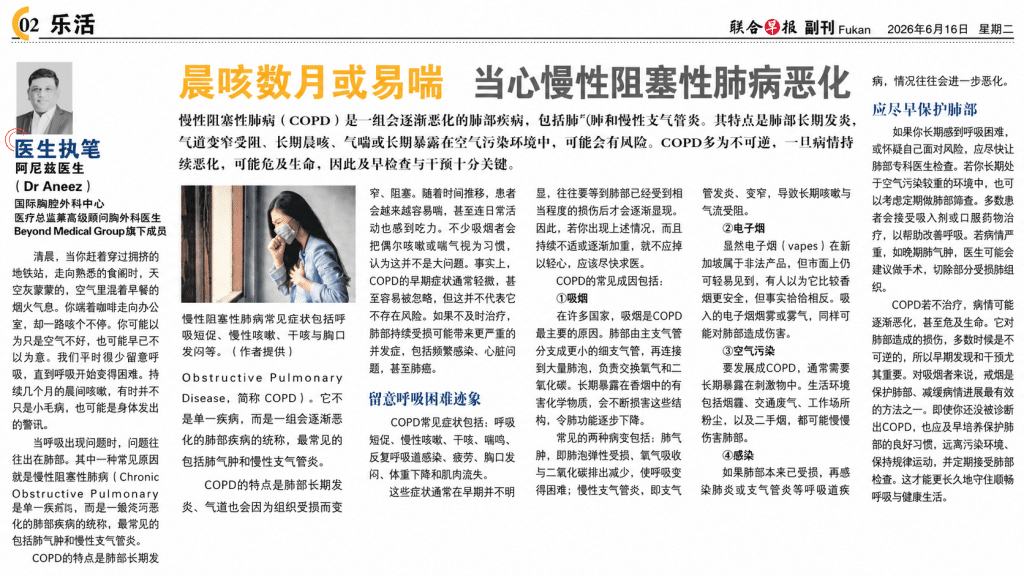
A persistent morning cough, wheezing or becoming breathless more easily may sometimes be dismissed as a minor problem. However, when these symptoms continue for several months or gradually worsen, they may be warning signs of an underlying lung condition such as chronic obstructive pulmonary disease.
In a recent feature published in Lianhe Zaobao Fukan on 16 June 2026, Dr Aneez D.B. Ahmed, Senior Consultant Thoracic Surgeon and Medical Director at the International Centre for Thoracic Surgery, discussed the symptoms, risk factors and management of chronic obstructive pulmonary disease, commonly known as COPD.
COPD refers to a group of progressive lung conditions that cause ongoing inflammation and obstruction of the airways. The two most common conditions associated with COPD are emphysema and chronic bronchitis.
As the airways become narrower and lung tissue becomes damaged, it becomes increasingly difficult for air to move in and out of the lungs. Over time, patients may experience worsening breathlessness, reduced stamina and difficulty carrying out everyday activities.
The early symptoms of COPD can be mild and easily overlooked. Some people may assume that an occasional cough or wheezing is simply caused by poor air quality, tiredness or smoking. However, persistent symptoms should not be ignored, particularly when they begin to affect daily activities.
Without appropriate management, lung damage may continue and increase the risk of complications such as recurrent respiratory infections and additional strain on the heart and lungs.
Common symptoms associated with COPD may include:
These symptoms may not be obvious during the early stages of the condition. In some cases, they only become noticeable after the lungs have already sustained a significant degree of damage.
Medical attention should be considered when respiratory symptoms persist, become more frequent or gradually worsen.
Smoking is one of the main risk factors for COPD. Cigarette smoke travels through the airways and exposes the lungs to substances that can irritate and damage the delicate structures responsible for breathing.
Long-term exposure may cause the airways to become inflamed and narrowed, while also affecting the lungs’ ability to exchange oxygen and carbon dioxide.
Smoking may contribute to two common changes in the lungs:
Emphysema occurs when the air sacs in the lungs become damaged and lose their elasticity. This affects the lungs’ ability to absorb oxygen and remove carbon dioxide.
Chronic bronchitis involves persistent inflammation and narrowing of the bronchial tubes, which may lead to long-term coughing, mucus production and airflow obstruction.
Electronic cigarettes or vapes, which are banned in Singapore, are sometimes perceived as a safer alternative to conventional cigarettes. However, the vapour or aerosol inhaled may still contain substances that irritate or damage the lungs.
Vaping should therefore not be regarded as harmless, particularly for individuals who already have respiratory symptoms or existing lung disease.
Long-term exposure to polluted air may also contribute to lung damage. Possible sources include traffic exhaust, smoke, second-hand smoke and dust or chemical irritants in certain working environments.
People who are regularly exposed to these irritants should pay attention to any persistent changes in their breathing.
For individuals whose lungs are already damaged, repeated episodes of pneumonia, bronchitis or other respiratory infections may further affect lung function.
These infections can aggravate coughing, breathlessness and airway obstruction, potentially contributing to the progression of COPD.
Individuals who experience long-term breathing difficulties or have risk factors for COPD should consider seeking medical assessment. Depending on the symptoms and medical history, the doctor may recommend lung function tests, imaging or other investigations.
Treatment is usually tailored to the severity of the condition. Some patients may require inhaled or oral medications to help open the airways, reduce symptoms and improve breathing.
In selected patients with severe or advanced emphysema, surgery may be considered to remove areas of severely damaged lung tissue. A specialist assessment is needed to determine whether such treatment is appropriate.
Although lung damage caused by COPD is often irreversible, early detection and management may help control symptoms and slow further deterioration.
For individuals who smoke, stopping smoking is one of the most important steps in protecting lung health. Reducing exposure to polluted environments, remaining physically active and attending appropriate medical follow-ups may also support better respiratory health.
A cough that lasts for several months or breathlessness that gradually worsens should not simply be accepted as part of daily life. Paying attention to these changes and seeking assessment early may help protect both breathing and overall health.
This article is adapted from Dr Aneez D.B. Ahmed’s contribution to Lianhe Zaobao Fukan, published on 16 June 2026. It is intended for general educational purposes and does not replace an individual medical consultation.



Member of Beyond Medical Group
Copyright © 2026 International Centre For Thoracic Surgery. All rights reserved | Terms & Conditions.


