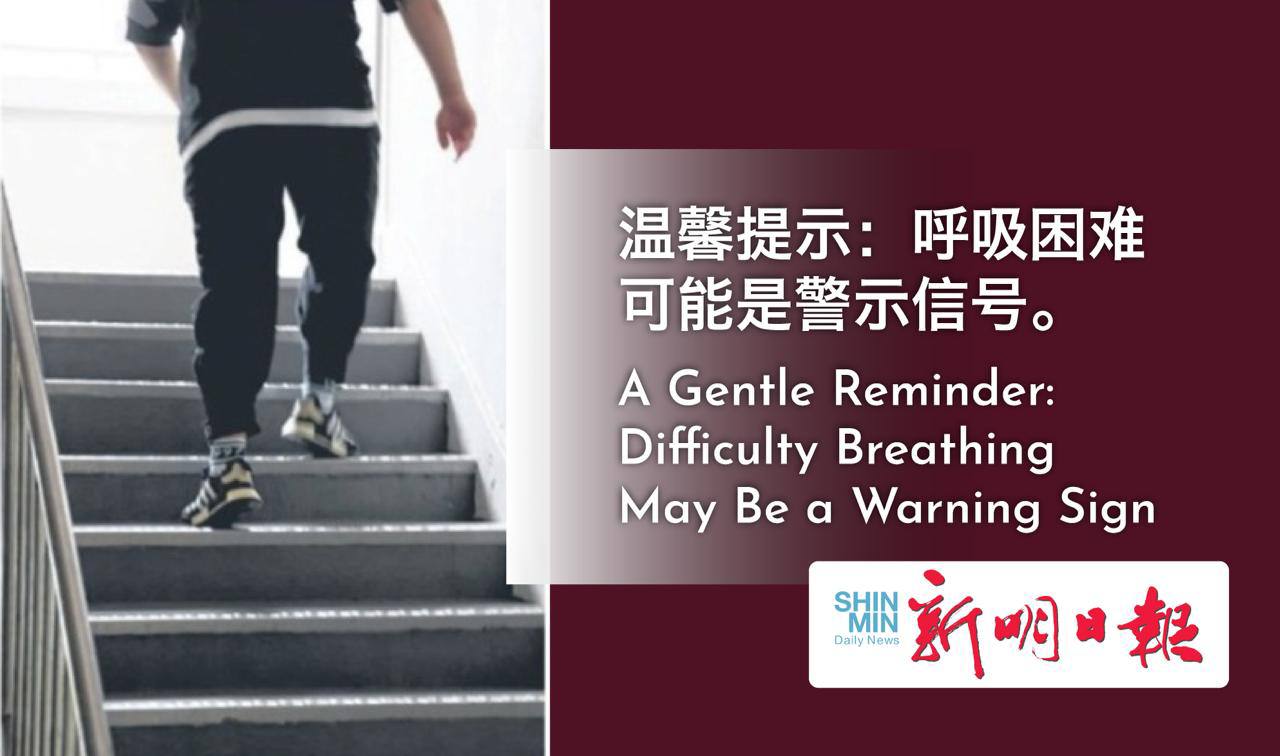
Feeling breathless more easily is often brushed aside as part of ageing, stress, or declining fitness. However, as highlighted by Dr Aneez D.B. Ahmed in a recent CNA Lifestyle feature, persistent breathlessness may sometimes point towards underlying chest or lung conditions that deserve proper medical attention.
Here are 5 key takeaways from the feature.
Many individuals assume becoming breathless more easily is simply part of getting older. However, a noticeable change in your ability to carry out routine activities should not be ignored.
If climbing stairs, walking short distances, or speaking for longer periods suddenly feels more tiring than before, it may reflect an underlying issue rather than normal ageing alone.
One reason conditions are sometimes detected late is because people subconsciously change their lifestyle to cope with symptoms.
Walking slower, avoiding physical activity, or taking more frequent breaks may gradually become part of daily life. Over time, this can make persistent breathlessness seem “normal”, even when it is not.
Recognising these subtle changes early may help prompt further evaluation before symptoms progress further.
Dr Aneez highlights that some conditions affecting the chest may not originate from the lungs themselves.
For example, the thymus is a small gland located between the lungs, behind the breastbone. Although it is not part of the lungs, conditions involving the thymus may still cause symptoms such as chest discomfort, breathlessness, muscle weakness, or swallowing difficulties because of its location within the chest.
Routine investigations such as breathing tests and chest X rays remain important, but they may not always detect every condition, especially in earlier stages.
Breathing tests primarily assess lung function, while standard imaging may not fully evaluate all chest structures. When symptoms persist despite “normal” findings, further imaging or specialist assessment may sometimes be required to better understand the cause.
Persistent fatigue, chest tightness, chronic cough, or unexplained breathlessness should not simply be ignored or repeatedly self managed without understanding the underlying cause.
Seeking medical advice is not about assuming the worst. It is about making informed decisions and understanding what your body may be trying to tell you.
As emphasised in the CNA feature, early evaluation may allow for more timely assessment and appropriate management if needed.
Read the full CNA Lifestyle feature here:
Breathlessness Causes And When To See A Doctor – CNA Lifestyle





Member of Beyond Medical Group
Copyright © 2026 International Centre For Thoracic Surgery. All rights reserved | Terms & Conditions.


